Gutter guards are a very practical way to reduce home maintenance costs. But what exactly are gutter guards, and how do they work to keep your gutter system running smoothly?
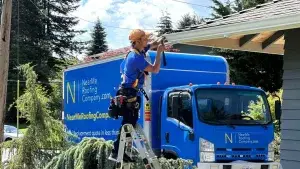
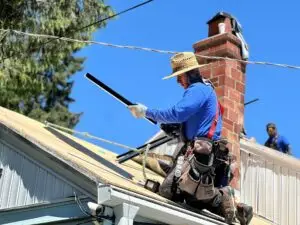
At NearMe Roofing Company, our team of experienced roofing professionals has installed countless gutter guard systems throughout the Seattle and Bellevue area, helping homeowners avoid clogged gutters and related issues. Learn more about our gutter replacement services throughout the Seattle and Bellevue area.
Installing gutter guards is a major step forward in home upkeep tech, preventing your gutters from getting clogged. This comprehensive guide is going to cover everything you need to know about gutter guards, right from their basic functionality to the different types available, helping you decide if they’re the right investment for your home.
What are Gutter Guards and How They Work?
Gutter guards are special protective barriers that cover or fit inside home gutters, acting as a filtration system that keeps leaves, twigs, pine needles, and other debris from getting into and clogging up your gutter system. Gutter guards act by letting rainwater flow freely through the gutters and downspouts while creating a solid barrier against the accumulation of material that can cause real problems for homeowners.
The main purpose of gutter guards is to keep water from draining freely from your roof, which in turn protects your home’s foundation, exterior surfaces, and landscaping from the risks associated with water overflow. When gutters get clogged, water can back up and cause major issues, including soil erosion around your home’s foundation, basement flooding, exterior staining, and even structural damage to your roof line. Preventing clogs with gutter guards helps avoid water damage and saves money on repairs.
Gutter guards basically become a preventive measure that helps you avoid cleaning your gutters very frequently. Rather than climbing ladders multiple times a year to remove accumulated debris, homeowners with proper gutter guard systems usually only need to do regular gutter cleaning once every few years, depending on where you live and the type of gutter guard you have.
The tech behind gutter guards has really evolved, with modern systems able to filter even the tiniest debris while still letting water flow smoothly during heavy rain. This is a major improvement over traditional gutters that need constant vigilance and regular maintenance to stop clogs and water damage.
How do Gutter Guards Work
The basic principle behind how gutter guards work involves creating a barrier that figures out how to distinguish between water and debris. Different gutter guard types use various methods, including mesh screening, surface tension, foam filtration, or brush-like bristles to achieve this separation. The idea is to let water flow through small openings or over special curved surfaces while leaves and twigs are either blocked or deflected away from the gutter opening.
Water flows easily through these systems because of physical properties like surface tension and gravity. In mesh-based systems, water passes through tiny holes that most foliage can’t fit through. Reverse curve gutter guards use the natural adhesion of water to guide rainwater flows along curved surfaces into the gutter while larger leaves just slides off the edge and falls to the ground.
During heavy rain, properly designed gutter guards keep water flowing smoothly by making sure that the water collection and channeling mechanisms can handle high-volume drainage without backing up or overflowing. The engineering behind these systems takes into account factors like roof pitch, rainfall intensity, and gutter capacity to get the best performance in any weather.
The effectiveness of gutter guards really depends on proper installation and choosing the right gutter guard for your specific conditions. When working right, these systems can achieve clog-prevention rates of 80-95% under typical North American conditions, which is a huge reduction in cleaning work while making sure your gutter system keeps protecting your home effectively.
What Kind of Gutter Guards are Out There?
The gutter guard market has six main types of protection systems, each with different mechanisms, price ranges, and performance characteristics. Understanding these different types of gutter guards will help you make a smart decision based on your specific needs, budget, and local environmental factors. Different types of gutter guards cater to various needs, from blocking debris to handling heavy rainfall.
Each type of gutter guard has its own strengths and weaknesses when it comes to protection, maintenance requirements, installation complexity, and long-term durability. Your selection should take into account your climate conditions, the kinds of foliage common in your area, your budget for both the initial investment and ongoing upkeep, and whether you’d rather hire a pro or do it yourself.
Costs vary a lot across gutter guard types, ranging from budget-friendly foam pieces at under a buck per foot to premium micro-mesh systems that can cost upwards of $20 per foot when professionally installed. Installation difficulty also varies, from simple DIY-friendly options to complex systems that require professional expertise and special tools.
Mesh screen guards
Mesh screen guards are basically perforated metal or plastic sheets that create a barrier over your existing gutters, effectively blocking medium to large leaves while letting water pass through their design. These guards are one of the most popular and cost-effective solutions for homeowners who want reliable protection without breaking the bank. The cost for mesh screen guards usually ranges from $1 to $4 per foot, with most people paying around $2.50 per foot for top quality. That’s pretty affordable, especially when you consider just how well they work, especially for people with overhanging trees that drop a lot of leaves in the fall.
Mesh screens are durable and long-lasting – we’re talking decades with barely any maintenance at all, as long as they’re installed properly and made from decent materials like galvanized steel or heavy-duty aluminum. They’re especially good in places with a lot of rain and wind carrying around foliage. They can handle all sorts of different weather conditions.
The good news is that putting in mesh gutter guards is often something you can do yourself, though if you’ve got a weird roof design, you might need a pro to make sure it’s done right.
Foam insert guards
Foam gutter guards are basically just pieces of porous foam that fit inside the gutters and create a filter that lets water through but blocks solid material from getting in. These foam pieces are one of the cheapest options around and super easy to DIY.
Foam gutter guards usually run about $6.31 per foot on average, making them a relatively affordable option for people who want to get protection without breaking the bank. They’re made from some kind of polyurethane or polyether compound that’s designed to be water resistant and hold up over time.
The main advantage of foam guards is that they’re a breeze to install – no special tools or expertise needed. You can just buy pre-cut sections that fit standard gutter sizes or trim them down to size if you need to. This makes them especially appealing to people who like to do their own house upkeep projects.
However, foam gutter guards do need to be replaced every few years because they tend to degrade over time from UV exposure and the elements. They work best in dry climates where there’s not a lot of growth inside the foam, and they’re not the best choice for places with a lot of organic material or high moisture.
Brush gutter guards
Brush gutter guards are just what they sound like – a brush that sits inside the gutter with bristles that catch leaves, twigs and other material while letting water flow around and through it. This design makes them super effective at blocking large debris while still allowing water to flow freely.
Brush gutter guards cost about $7.66 per foot on average, which is a decent price point. The bristle design is especially good for catching pine needles and larger debris that might slip through other types of gutter guard systems. Brush gutter guards excel at handling pine needles in areas with overhanging trees.
Installing brush gutter guards is as easy as just plopping them inside the existing gutters – no cutting, drilling or complicated mounting required. They can be easily removed for cleaning or replacement when need be. One thing to note is that you will need to clean out material that accumulates in the bristles every now and then. But that’s a lot easier than doing a full gutter cleaning.
Micro-mesh guards
Micro-mesh gutter guards are the high end option when it comes to protection – they’re a super fine stainless steel or aluminum mesh that catches even the tiniest stuff like roof grit, small leaves and fine organic matter. These systems offer the highest level of protection available in the residential gutter guard market.
The downside is that they’re pricey, running about $7.53 per linear foot for the materials, though that can go up to $15-20 per linear foot when you factor in the cost of expert installation. This is because they’re precision engineered and require quality materials to work right.
Expert installation is often recommended for micro-mesh systems because it requires some finesse to get them fitted and sealed right. When done correctly, these guards perform exceptionally well in all kinds of weather conditions, including heavy rain and snow. At NearMe Roofing Company, we specialize in such installations to ensure they handle fine debris and smaller debris effectively.
You should also note that the fine mesh design can occasionally require some surface cleaning to get rid of accumulated fine debris. But this is way less often than traditional gutter cleaning. Micro-mesh gutter guards are great for keeping debris out, including smaller debris like pine needles.
Surface tension helmets
Surface tension gutter guards, also known as reverse curve gutter guards, work by using curved covers that use the physics of water adhesion to direct water into the gutters while letting material slide off the curved surface and fall to the ground. This design is one of the most sophisticated approaches to gutter protection. Reverse curve gutter guards utilize surface tension to allow water to flow while blocking debris.
These reverse curve guards cost about $6 per foot for the materials, but the complexity of correct installation usually requires a pro – which can add a lot to the overall cost. The engineering behind these systems requires precise angles and mounting to work across different roof styles and rainfall conditions.
Expert installation is rather crucial for reverse curve gutter guards – you see, proper alignment and sealing are pretty darn important here. If installation isn’t done right, water is likely to overflow the gutter entirely during heavy downpours, creating more drainage problems than the system was even intended to fix.
Reverse curve guards tend to work a treat for homes with a lot of water runoff in rainy climates – their ability to handle big volumes of water while shedding leaves is really what they’re made for. But they may not be as effective when it comes to very fine debris, so you’ll need to think carefully about your specific roof pitch and gutter system compatibility before deciding if they’re for you.
PVC covers
PVC gutter covers are probably the most budget-friendly solid cover option out there, featuring plastic covers designed to block out larger leaves, and then some. They’re also resistant to mildew and biological growth. They provide basic gutter protection at a super low cost point in the gutter guard market.
Working out at around $0.70 per foot, PVC gutter covers are the cheapest option you can get, making them pretty attractive for homeowners who are working with a tight budget or just want some basic protection for simple problems. The plastic construction provides good durability for most jobs while keeping costs down. When you purchase gutter guards like these, consider the gutter material for compatibility.
Being pretty lightweight, PVC covers are really easy to install, but their performance can be a bit limited in extreme weather, where they might crack or warp under temperature stress. They work best in temperate climates with moderate weather variations and heavy leaf fall as the primary concern.
While PVC covers do a good job of blocking out larger leaves, they may not provide the same level of comprehensive protection as some of the more advanced systems out there. They’re a practical roofing solution for homeowners dealing mainly with seasonal leaf accumulation rather than dealing with a wide range of material types or challenging environmental conditions.
Key Benefits of Installing Gutter Guards
Putting in gutter guard systems does more than just make life easier, it offers a whole host of benefits that extend far beyond just convenience. You’ll see measurable improvements in property upkeep, property protection and safety. The most immediate benefit homeowners notice is the dramatic reduction in gutter cleaning frequency – most systems get this down to once every few years, depending on local conditions and the type of guard you choose.
Property protection is probably one of the most important long-term benefits of gutter guards. By keeping debris out and preventing clogs, these systems help prevent water damage to your home’s foundation, siding and landscaping around your property. Consistent drainage stops soil erosion which can undermine foundation stability and stops the basement flooding risks associated with water overflow during heavy rainfall. Gutter guards protect your home by ensuring water flows properly, reducing water damage risks.
The safety improvements associated with gutter guards are huge. By drastically reducing the need for ladder climbs, homeowners significantly reduce their risk of falls and injuries associated with property upkeep. And this safety benefit just gets more important as homeowners get older and may find ladder work more challenging or downright dangerous.
Gutter guards also help extend the lifespan of your gutter system by reducing corrosion and ice dam formation. When gutters stay clear of leaves, water drains properly, rather than sitting stagnant, which reduces metal corrosion and rust that can compromise gutter integrity over time. In colder climates, proper drainage stops ice dams that can cause significant damage.
Other benefits include blocking pest infestations, as clean gutters are less attractive to birds, rodents and insects that often nest in filled gutters.
Installation and Maintenance Considerations
The gutter guard installation process varies pretty significantly depending on the type of guard you choose and how complicated your existing gutter system is. DIY installation is possible for several guard types, including foam gutter guards, brush gutter guards, and some screen varieties, making these options pretty attractive for homeowners who enjoy tackling their own diy project.
Foam gutter guards are the simplest installation option, requiring only basic measuring and cutting to fit standard gutter dimensions. The foam pieces just rest inside the gutter channel, requiring no special tools or fastening hardware. Similarly, brush gutter guards are installed by placing cylindrical brush sections inside gutters, with no cutting or mounting required. Foam and brush guards offer easy installation for a diy project.
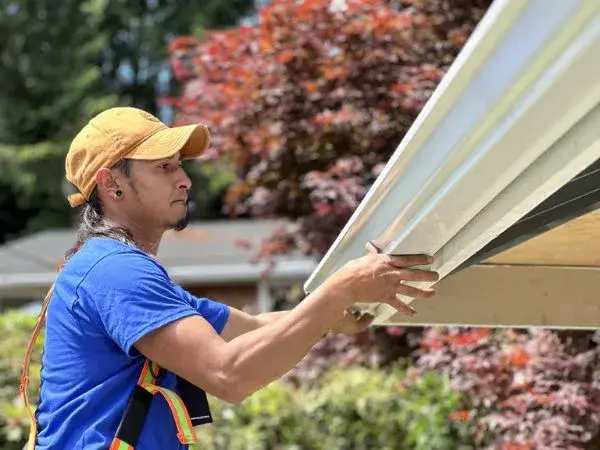
Expert installation is recommended or even necessary for more advanced systems like micro-mesh gutter guards and surface tension helmets. These systems require precise measurements, proper mounting hardware and careful attention to sealing and alignment details to ensure optimal performance. Professional installers also provide warranty coverage and have experience managing the complexities of different roof styles and gutter configurations. At NearMe Roofing Company, our professional installation ensures your gutter guards act reliably.
Installation costs vary a lot based on guard type and installation complexity, ranging from $3 to $12 per foot when including professional services. While this represents a pretty big upfront investment, most homeowners find the long-term savings in reduced maintenance costs and property protection justify the initial expense.
Most systems require an annual inspection and occasional removal from the guard surface, though this maintenance is a whole lot easier and less frequent than traditional gutter cleaning. Gutter guards play a vital role in minimizing debris accumulation and smaller debris buildup.
How to Choose Gutter Guards
Choosing the right gutter guard requires careful consideration of multiple factors that influence both performance and long-term satisfaction with your investment. Local climate conditions represent probably the most critical factor – rainfall intensity, frequency and seasonal patterns all have a direct impact on how different guard types will perform in your specific environment.
The types of material that are common in your area are going to influence which gutter guard you choose, and thats not always a simple decision. If you live under a canopy of overhanging trees with big leaves, you’re likely going to have different needs to someone who has to deal with lots of pine needles or small twigs. Knowing what you have to deal with is going to help you narrow down the options to find the right gutter guard that will actually work for you. Pine needles can be particularly challenging, so select the right gutter guard for them.
Budget is another factor that plays a big role in selecting the right gutter guard. You need to think about the upfront cost of the system, but also the cost of upkeep over the years. While premium systems like micro-mesh guards are costly upfront, they can pay for themselves in the long run because they are less prone to damage and blockages. You need to weigh up the pros and cons of each option and consider whether buying a more expensive system will actually save you money in the long run. Save money by choosing guards that reduce water damage.
The design of your structure and the condition of your current gutter system are also going to influence which gutter guard you can use. If you have a really steep slope you might need a guard that is specially designed to handle fast flowing water, whereas if you have a really gentle slope you might need a system that is better suited to slow flowing water.
You also need to consider the type of gutters you have – are they made of plastic, metal or something else? and whether the guard you choose will fit and work properly with them. Consider the gutter material when planning gutter guard installation.
Deciding to do the installation yourself, or to hire a professional, is also an important decision to make. While DIY installation can save you money, expert installation can ensure that the system is installed properly and is covered by a warranty. This can be especially important if you have a complex setup or are unsure about how to install gutter guards yourself. It’s a great diy project for simpler foam and brush guards.
Aesthetics are also something to consider when choosing a gutter guard. If the system is going to be visible from the outside of your house, you may want to choose a system that blends in with your color scheme, rather than standing out like a sore thumb. Modern gutter guard systems are designed to be visually unobtrusive, but still do a good job of keeping your gutters clean and allowing water to flow.
Gutter Drawbacks and Limitations
While gutter guards are a great investment for most homeowners, there are a few things to keep in mind when choosing a system. First of all, there is the upfront investment – installing a full system on a typical home can cost anywhere from $1,500 to $6,000, depending on the size of the house, the type of guard and the complexity of the installation.
Another thing to consider is how well the system holds up to heavy downpours. Some systems can become overwhelmed by excessive leaves or rainfall intensity, which can reduce their capacity to let water to flow. This is not usually a problem, as long as you choose a system that is designed to handle the local rainfall intensity and get it properly installed.
Some types of gutter guard can also potentially trap moisture, which can lead to mould or mildew problems if not properly maintained. This is usually a problem that is easily avoidable by choosing the right system and doing regular inspections.
No system is completely maintenance free, especially if you live in an area with a lot of trees. Even with a gutter guard, you may still need to do some occasional cleaning and upkeep to keep the system working properly. Avoid frequent cleaning by selecting guards that excel at blocking debris and smaller debris.
If the system is not installed properly, it can also cause damage to the existing gutter system, which can void any warranties that you may have. This is one of the reasons why it is so important to have a professional do the installation if you are unsure about how to do it right.
Even with these limitations, most homeowners find that a well selected and installed gutter guard provides excellent value through reduced upkeep, improved property protection and enhanced safety. Gutter guards protect against water damage and help water to flow efficiently.
Conclusion
Gutter guards are special protective barriers that cover or fit inside home gutters, acting as a filtration system that keeps debris such as leaves, twigs, pine needles, and other debris from getting into and clogging up your gutter system while allowing rainwater to flow freely.
The decision to buy a gutter guard should be based on careful consideration of your specific circumstances, including local climate, material types, budget constraints and upkeep preferences. While no system eliminates all gutter maintenance, the right gutter guard can significantly reduce cleaning frequency and prevent damage. Gutter guards protect your investment by minimizing debris accumulation and ensuring water to flow properly.
For Seattle, Bellevue, and residents in the Puget Sound region looking to save money on long term roof maintenance costs, while at the same time enhancing their home’s protection, gutter guards offer excellent value. The cost of a good system can pay for itself within 3-7 years through reduced cleaning costs and prevented damage, which is why they are such an important part of any comprehensive property upkeep strategy.
Take some time to work out your specific needs, do some research, and if you’d like to discuss your options with one of our expert roofers at NearMe Roofing Company, give us a call today at +1 (206) 487-4380. We can help install gutter guards to protect against clogged gutters, smaller debris, and water damage. All our services are protected by our extensive roofing warranty and we also offer flexible financing options to help make your roof and gutter projects more affordable.