Your metal roof can protect your home for up to 50 years. But that impressive lifespan really depends on the underlayment beneath those metal panels. Quality underlayment will ultimately determine how well your roof performs in the coming years.
Many homeowners only focus on getting the right metal roofing panels but ignore the importance of proper underlayment. Installing the right underlayment helps protect your investment, whether you’re installing a new metal roof or replacing an existing one. Underlayment acts as a secondary level of protection within the entire roof system, providing critical waterproofing and moisture prevention that enhances the longevity of your roof.
In this guide, we’ll show you exactly what to look for in metal roof underlayment. Our expertise comes from years of installing metal roofs and underlayment throughout the Pacific Northwest region. A strong support system is essential for the protection and durability of your metal roof, and it’s crucial that underlayment is installed correctly to ensure long-term performance and safety.
Understanding Metal Roof Underlayment
Roof underlayment creates a water-resistant barrier between your roof deck and metal panels. Metal roof underlayment acts as a protective barrier and serves as a crucial layer beneath the metal panels, enhancing the roof’s resistance to moisture and environmental elements.
If water gets past the metal panels, the underlayment—this extra layer—provides that crucial second line of defense.
Essential Functions of Metal Roof Underlayment
Quality underlayment would do more than stop water from getting through. Choosing the best support system and underlayment ensures the best protection and product longevity for your metal roof. A good underlayment would improve the longevity of your metal roof by preventing common problems that shorten its lifespan. As extreme heat and cold cause metal panels to expand and contract, your underlayment must flex and move without losing its protective qualities.
We recommend choosing an underlayment for your metal roof that matches its expected lifespan. Here are a few other things that quality underlayment provides:
- Protection against water infiltration
- Waterproofing protection and prevention of moisture infiltration
- Defends against severe weather
- Management of temperature changes
- Reduction in roof noise
- Creates a smooth surface for panel installation
- Ensure compliance with building codes
Metal Roof Underlayment Types
Choosing the right underlayment for your metal roof starts with understanding your options. There are three common types of roofing underlayment for metal roofs: felt, synthetic, and self-adhered membranes, each offering different levels of moisture resistance, heat protection, and durability. Your decision will ultimately depend on factors like climate, budget, the specific requirements of your roofing project, and selecting the appropriate underlayment for metal as a key decision point.
Modern vs Traditional Materials
Traditional felt paper, a common material and the most common material for traditional metal roofs, served well for many years due to its cost-effectiveness and familiarity. However, it has limitations in durability, especially when compared to other underlayment materials such as synthetic or rubberized asphalt options. Synthetic underlayments now offer clear advantages. One synthetic roll covers 1,000 square feet, while felt only covers 200-400 square feet per roll. Other major advantages of synthetic underlayments over felt are:
- Synthetic underlayment also withstands temperatures up to 260°F, while felt deteriorates under extreme heat. Unlike felt, synthetic underlayment can endure high temperature environments without degrading, making it more suitable for a wider range of climates.
- Synthetic is lightweight at 2-4 pounds per square compared to felt’s 15-30 pounds.
- Synthetic underlayment is resistant to UV damage for up to six months or longer while felt underlayment typically degrades within a few weeks.
For these reasons, synthetic underlayment is often chosen over comparable underlayment options for its superior durability, moisture resistance, and longevity.
Self-Adhering Options
Self adhered membranes are a peel and stick product that is applied directly to the roof decking. These membranes use either a rubberized asphalt or butyl-based adhesive mounted on either polyethylene or polypropylene carrier sheets. A hand roller should be used to ensure the membrane is installed correctly and to eliminate air bubbles.
They provide advanced protection to metal roofs. Their ability to self-seal around fasteners makes them really effective against water infiltration.
Durability Comparison
Each underlayment type offers different performance levels. Here’s what you can expect:
FeatureSyntheticFeltSelf-AdheringLifespan40+ years15-20 years40+ yearsHeat ResistanceUp to 260°FLimitedUp to 240°FTear ResistanceHighLowVery High
Synthetic underlayment, a synthetic sheet made with newer technology, continues gaining popularity thanks to its durability, high-temperature tolerance, and moisture resistance. It offers the most reliable performance and product longevity among underlayment options. While felt paper is significantly cheaper and is a reliably water resistant option, it has limited durability compared to synthetic underlayment, which offers the protection your metal roof requires.
For homes in areas with ice dams or high moisture, we sometimes recommend self-adhering membranes around eaves, valleys, and dormers as they help create air barriers while also handling temperature changes which offers crucial protection in challenging weather conditions.
Choosing the Right Underlayment for Your Metal Roof
Your metal roof’s performance and durability depend on several factors. The combination of quality roofing materials and the right roofing underlayments plays a crucial role in determining how well your roof will perform over time. Let’s look at what matters most when selecting underlayment that will protect your home for decades.
When making your decision, consider the importance of selecting the right roofing material and roof underlayments for your specific needs to ensure long-lasting protection and optimal performance.
Weather and Climate Impact
Local weather patterns should guide your underlayment choice. Different regions need different solutions:
- Cold Areas: Needs ice and water shield along eaves and valleys for ice dam protection
- Hot Regions: Requires high-temperature rated materials that maintain integrity in high temperature environments
- Coastal Zones: Calls for corrosion-resistant products with extra moisture barriers
- General Note: Some underlayments perform better in high temperature environments, while others may face challenges in low temperature environments, such as installation difficulties or reduced effectiveness
Some underlayments need at least 40 degrees for proper installation. For homes in sunny areas, we recommend materials rated for up to 240°F to ensure lasting protection. In cold climates, ice dam protection is especially important to prevent water leaks at vulnerable areas like eaves and valleys.
Roof Design Considerations
Your roof’s slope affects which underlayment works best. Here’s what you should know:
- Low-slope roofs (2:12 to 4:12) need double coverage underlayment. For synthetic materials to work properly, your roof needs at least a 3:12 pitch. Steeper sloped metal roofs are commonly protected using felt underlayment, which is cost-effective and water-resistant, though it may have limited durability in high-temperature environments. These requirements help ensure water flows off your roof instead of seeping underneath.
- Complex roof designs with multiple angles cost more to protect since they need extra materials and careful planning. Sensitive locations like valleys and dormers require an extra weather resistance barrier to provide additional waterproofing and moisture protection.
Protecting sensitive locations is crucial for the durability and performance of your roofing system.
Value and Investment
While underlayment makes up a small part of your total roofing cost, it still goes a long way in determining how long your roof lasts. Choosing the right underlayment is crucial for any residential or commercial project, as it ensures proper weather resistance and moisture protection regardless of the building type. Consider these points:
- Cost vs Durability: Synthetic underlayments cost more upfront but last longer than traditional felt. Your final price depends on:
- How long the product lasts
- Whether you choose self-adhering or standard materials
- Your specific installation needs
- Installation Costs: Labor and related costs typically constitute about two-thirds of what you’ll pay. Choosing underlayment that matches your metal roof’s lifespan helps avoid replacement costs later.
Poor underlayment choices often lead to trapped moisture and hidden damage. Think of underlayment as insurance for your roof and a key component of the overall metal roof system—spending a bit more now can save significant money down the road, whether your project is residential or a commercial project.
Metal Roof Underlayment Performance Features
Your metal roof’s underlayment needs specific features to protect your home effectively. A high-quality underlayment acts as a water barrier and protective barrier, helping to prevent moisture infiltration and safeguarding your roof structure from water damage. Let’s look at what makes certain underlayments perform better than others.
Water Protection
Quality underlayment is installed as a protective layer over your roof decking or plywood, creating a water-shedding barrier between your roof deck and metal panels. This layer helps prevent:
- Mold and rot in your roof deck
- Damage from ice dams
- Structural weakness from moisture
- Problems from wind-driven rain
Heat Resistance
Metal roofs get heated in direct sunlight and different underlayment materials handle this heat differently. For metal roofs in hot climates, high temp underlayments—such as high temp peel and stick membranes or ice & water shield—are specifically designed to withstand higher temperatures and provide superior moisture protection:
TypeMaximum Temperature RatingStandard SyntheticUp to 260°FSelf-Adhered (Standard)Up to 240°FHigh-Temperature ButylUp to 300°F
Proper Airflow
Even the best underlayment needs good ventilation to work properly. Water vapor doesn’t get through metal panels naturally, so proper airflow becomes crucial for two reasons:
- Managing Moisture: Without good ventilation, moisture gets trapped under metal panels, risking corrosion. Your roof system needs proper airflow underneath to stay dry.
- Controlling Temperature: Good ventilation helps maintain steady temperatures, especially important in homes with finished attics. This helps your underlayment last longer while improving your home’s energy efficiency.
At NearMe Roofing Company, we typically recommend a balanced system with both intake and exhaust vents. This creates continuous airflow that prevents moisture problems and protects your roof system. Remember, quality underlayment works best when paired with proper ventilation. Together, they’ll help your metal roof deliver the protection you expect.
Selecting Metal Roof Underlayment for Your Home
Like choosing the right metal roof type, picking the proper underlayment requires careful consideration. Selecting the best underlayment choice is essential for a proper metal roofing system, as it directly impacts durability, waterproofing, and overall performance. Let’s look at what matters most for your home’s protection, including how a total protection roofing system can provide a comprehensive approach.
Understanding Your Needs
Before selecting underlayment, consider these key factors:
- Local building code requirements
- Your roof’s design and complexity
- Metal roof lifespan (40-70 years)
- Weather challenges in your area
- Ventilation system needs
- The type of metal roofing materials and roof underlayments used in your metal roofing system
Homes in areas with ice dams often need extra protection. Self-adhering membranes work well for vulnerable spots like valleys and eaves, giving you targeted protection without unnecessary expense.
Cost vs Value
The price of underlayment varies significantly. Here’s what you can expect to pay:
TypeCost per Square FootLifespanFelt$0.15-$0.3020-30 yearsSynthetic$0.50-$0.7525-35 yearsSelf-Adhering$1.00-$1.5025-35 years
Felt underlayment costs less upfront but synthetic options typically last longer. Many synthetic products protect your roof for its entire lifetime. Synthetic underlayment is often chosen over comparable underlayment options because of its superior durability, moisture resistance, and longer lifespan.
Expert Tips for Your Project
Your roof deserves proper protection. Here’s what works best:
- Best Overall Protection: Use both mechanical and peel-and-stick methods. This combination gives you reliable performance at a reasonable cost.
- Temperature Protection: Pick underlayment rated for high heat since metal roofs get very hot. The right material prevents early wear and extends roof life.
- Smart Budgeting: Consider premium underlayment for high-risk areas like valleys and standard synthetic for the main roof. This strategy protects vulnerable spots while managing costs.
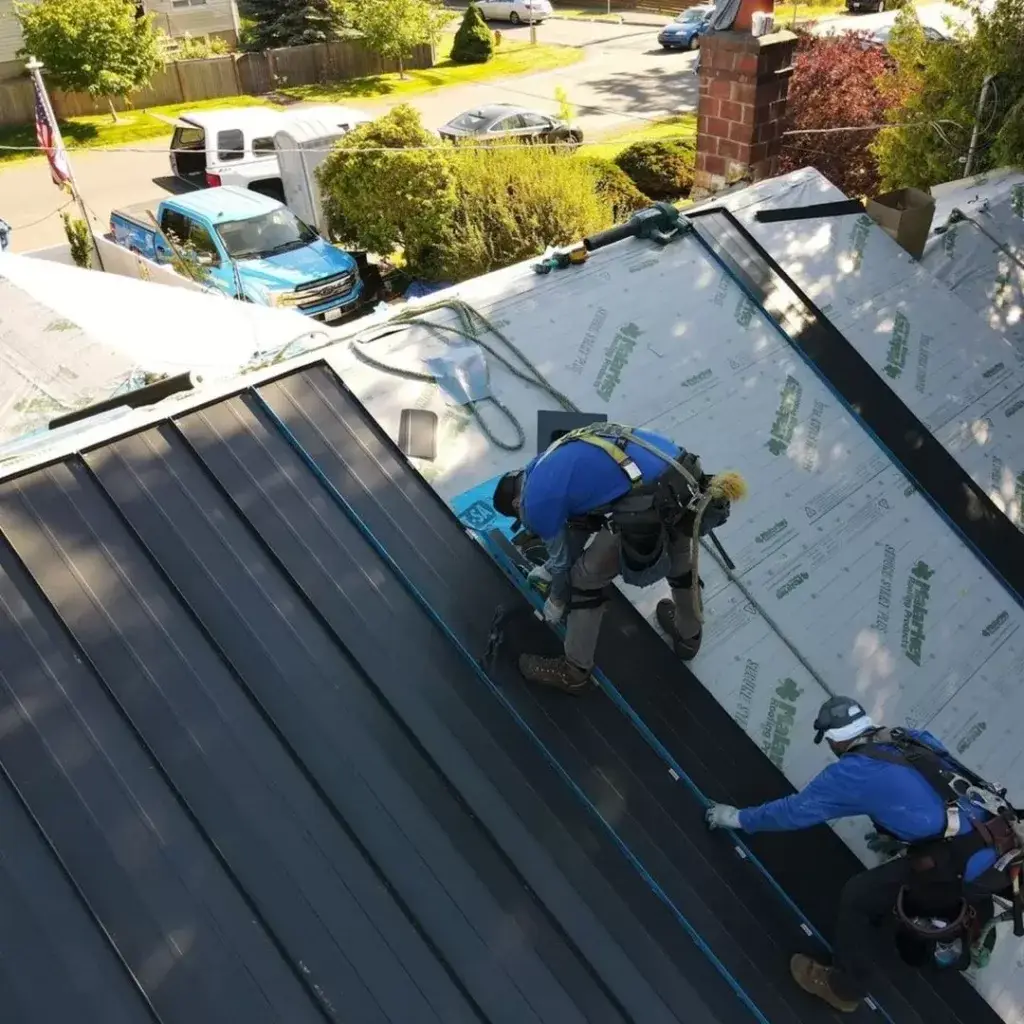
Your underlayment should last as long as your metal roof. Poor choices often lead to trapped moisture and expensive repairs. Quality underlayment protects your investment for decades. Professional installation helps ensure proper protection. While DIY might save money initially, correct installation matters for warranties and long-term performance. Trust experienced metal roof contractors like NearMe Roofing Company who know how to install metal roof underlayment correctly.
Protecting Your Investment with Quality Underlayment
Your metal roof works like a shield, but that shield needs proper backing to last. Roof underlayments and roofing underlayment work together with quality roofing materials to create a comprehensive barrier, protecting your home from moisture, heat, and weather damage. Quality underlayment creates this crucial foundation, helping your roof protect your home for decades. Underlayment quietly fights against moisture, heat, and weather damage day after day. The right underlayment choice paired with proper installation helps prevent common problems that could threaten your roof’s integrity.
Metal roofs can last 50 years or more, but that impressive lifespan starts with what lies beneath. When you choose roofing materials and underlayments that match your climate needs and installation requirements, you’re investing in lasting protection for your home.
Remember, your metal roof protects one of your biggest investments – your home. Taking time to select the right roofing underlayment and roofing materials now helps ensure your roof performs well for generations to come.
FAQs
What is the best underlayment for a metal roof?
Synthetic underlayment is considered the best option for metal roofs. A synthetic sheet, made from woven or spun polyethylene or polypropylene, offers high-temperature tolerance, long lifespan, and excellent moisture resistance, delivering the most reliable performance compared to traditional felt options. Self-adhering membrane is also an excellent choice, especially for areas prone to ice dams or high moisture exposure, as its peel-and-stick application and air barrier properties provide the most reliable performance in demanding conditions.
Is a moisture barrier necessary under a metal roof?
Yes, a moisture barrier is essential under a metal roof and helps prevent condensation buildup as well as protects the roof deck from water damage. Some underlayments also serve as an air barrier, which improves energy efficiency and moisture control by resisting air infiltration. This helps maintain the structural integrity of your roofing system. Proper installation of the moisture barrier is crucial for its effectiveness.
How does climate affect underlayment selection for metal roofs?
Climate plays a significant role in choosing the right underlayment. Cold regions may require ice and water shields for ice dam protection, while hot climates need materials rated for high temperature environments. In low temperature environments, it’s important to select underlayments that maintain their effectiveness and are easy to install. Coastal areas demand enhanced moisture protection. Always select an underlayment that can withstand your local weather conditions.
What are the key performance features to look for in metal roof underlayment?
Important features include moisture resistance capabilities, temperature tolerance ranges, and compatibility with proper ventilation. Fire resistance is also an important feature, especially for homes in areas where building safety standards require fire-resistant roofing materials and underlayments. Look for underlayments that can withstand high temperatures (up to 260°F for synthetic options), provide excellent water resistance, and work well with your roof’s ventilation system.
Is professional installation necessary for metal roof underlayment?
While DIY installation might seem tempting, professional installation is highly recommended. Proper installation is crucial for maintaining manufacturer warranties and ensuring maximum protection. It is essential that the underlayment is installed correctly to prevent issues like peeling or compromised durability. Professionals have the expertise to select and install the right underlayment system for your specific needs, potentially saving you from costly future repairs.