When someone gets hurt on a roofing job, everyone suddenly cares about one thing: who’s legally and financially responsible? That’s exactly what we mean by roofer injury liability. Roofing work comes with inherent risks due to its physical demands and the potential for accidents, which is why liability is such a major concern.
In this guide, we’ll break down what roofer injury liability is, how it works in real-life situations, and what it means for roofing businesses and homeowners alike. We’ll look at common roofing accidents, employer and homeowner responsibility, insurance options, and what happens if we’re found liable after an injury—including the financial risks and personal injury claims that can arise from these incidents.
Our goal is simple: help roofing professionals or property owners understand the risks, put the right protections in place, and avoid expensive surprises when something goes wrong on a roof.
Introduction to Roofer Injury Liability
Roofer injury liability refers to who is legally responsible when a roofer is injured while working on a roof. Because roofing is one of the most dangerous trades in construction, the law and insurance world pay special attention to how injuries are handled.
In most cases, liability is shared across several parties depending on the situation, and several factors determine who is liable in each case:
- The employer or roofing company (for worker safety, training, and workers’ comp coverage)
- The property owner or homeowner (especially if they hired unlicensed or uninsured workers, or created unsafe conditions)
- Occasionally, third parties, like equipment manufacturers, subcontractors, or general contractors
When we ask, “What is roofer injury liability?” we’re really asking:
- Who pays medical bills and lost wages if a roofer falls or gets hurt?
- Whose insurance policy responds first, and is it enough?
- Under what circumstances can a homeowner or building owner be sued?
- How do we protect our roofing business from devastating claims?
Understanding these pieces upfront lets us structure our contracts, insurance, and safety practices in a way that protects both our team and our clients. It’s not just a legal topic; it’s a core part of running a responsible roofing business or hiring roofers as a property owner.
Understanding Roofing Accidents
Roofing accidents usually aren’t random: they tend to follow clear patterns and are often the result of potential hazards present on roofing sites. Knowing the most common causes helps us see where liability may land.
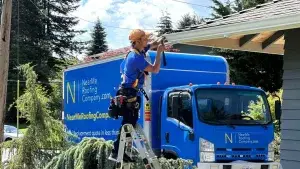
Roofing is considered one of the most dangerous jobs in the US due to these hazards, with high injury rates and risks specific to this type of work. For those looking for roofing professionals in Seattle, Near Me Roofing Company serves the entire Puget Sound area, providing trusted residential roofing services.
Common types of roofing accidents
We typically see:
- Falls from heights: off ladders, scaffolding, or roof edges
- Slips and trips: on loose shingles, tools, cords, tarps, or debris
- Falling objects: tools, tiles, or materials dropped from a roof
- Structural failures: weak decking, rotten wood, or skylights giving way
- Electrical contact: overhead power lines, metal ladders, or tools
- Heat, weather, and exposure: heat stroke, dehydration, icy surfaces, high winds
Each category can point to different liability questions: Did we follow OSHA standards? Was the structure known to be unsafe? Were workers trained? Did the homeowner warn us about hidden dangers?
Why roofing accidents carry higher liability exposure
- High risk of serious injury or death (falls are a leading cause of construction fatalities; roofing is consistently ranked among the most dangerous jobs in the US)
- Work on or near someone else’s property and occupants
- Use of ladders, harnesses, power tools, and heavy materials
Liability exposure increases significantly when a workplace accident occurs in such a high-risk trade.
Because the stakes are so high, insurers and courts look closely at safety practices, documentation, and contracts. When we can show that we used proper fall protection, trained our crew, and followed regulations, we’re in a much better position if a claim arises.
Employer Liability and Insurance
As roofing employers or contractors, we carry a primary duty of care toward our employees and subcontractors. That means we’re responsible for creating a safe work environment and following safety laws. Implementing proper safety protocols and ensuring the use of appropriate safety equipment are essential to reduce the risk of injury or accidents on the job.
Employer responsibilities
We’re generally expected to:
- Provide proper training on fall protection, ladder use, and equipment
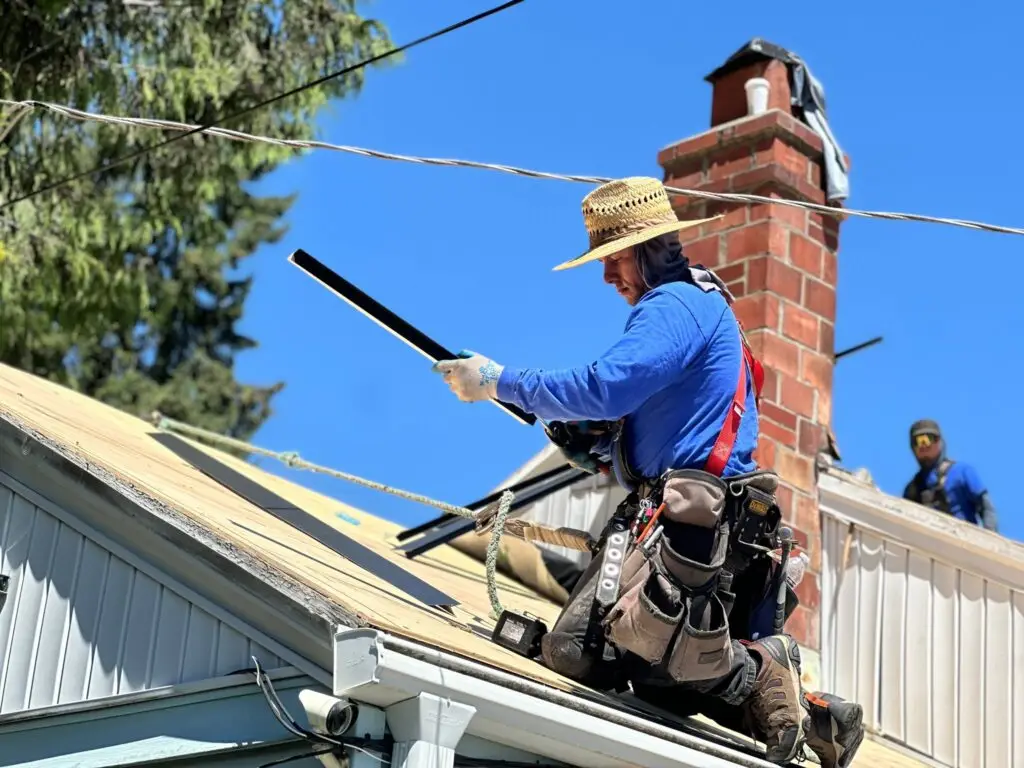
- Supply and enforce use of PPE (personal protective equipment, such as harnesses, lanyards, anchors, helmets, non-slip shoes), which is required for legal compliance and helps prevent injuries
- Follow OSHA and state safety standards for roofing work
- Keep equipment in safe working condition
- Maintain clear safety procedures and documentation
If a roofer is injured and we’ve ignored these obligations, we can face not only insurance claims but also fines, lawsuits, and regulatory penalties.
Workers’ compensation and employer liability
For most roofing businesses, workers’ compensation insurance is mandatory. In fact, having proper workers compensation coverage is a legal requirement and a key protection for both employers and employees, ensuring that everyone is safeguarded in the event of a workplace injury. Workers’ comp typically:
- Covers medical expenses for injured workers
- Replaces a portion of lost wages
- Limits an employee’s right to sue the employer in many cases
If we don’t carry workers’ compensation when required, we can be personally on the hook for:
- Medical bills and lost wages
- Penalties from state agencies
- Civil lawsuits from injured workers
So from a liability standpoint, carrying workers’ compensation and enforcing safety policies is non‑negotiable. It protects our people and shields the business from potentially ruinous claims.
Insurance Coverage for Roofers
For roofing professionals, insurance is the backbone of managing roofer injury liability. There is a wide range of insurance policies and insurance solutions available specifically for roofing professionals, including general liability, workers’ compensation, and umbrella coverage. We usually need several types of coverage working together, and it’s important to work with a specialized insurance provider to ensure you have the right protection for your business.
Key policies roofers should carry
Having the right insurance coverage is essential to address all major risks faced by roofing contractors.
1. Workers’ compensation
- Protects employees and direct labor
- Responds to on‑the‑job injuries, regardless of fault, in most cases
2. General liability insurance
- Covers bodily injury to third parties (like homeowners, neighbors, passersby)
- Covers property damage we cause during roofing work, including property damage coverage for repairs, legal fees, and settlements
3. Commercial auto insurance
- Covers vehicles used to transport crews, tools, and materials
4. Umbrella or excess liability
- Adds extra layers of protection above the limits of existing policies
5. Professional or contractor’s liability (where applicable)
- Can come into play if a claim alleges negligent supervision or planning
These policies are essential for offering financial protection against accidents, injuries, and claims, helping contractors avoid personal financial liability and maintain business continuity.
Why limits and exclusions matter
It’s not enough to simply “have insurance.” We need to:
- Check that roofing work is not excluded in the policy (some generic policies quietly exclude high‑risk trades)
- Carry adequate limits, roofing injuries can easily exceed low policy caps
- Review all insurance details to ensure we are adequately insured for any potential damages or injuries
- Confirm coverage extends to subcontractors or requires them to carry their own
When we understand our coverage, we can confidently explain to clients how their risk is reduced when they hire us and protect our business if a serious injury occurs.
Homeowner’s Role in Roofer Injury Liability
Homeowners are often surprised to learn they can be pulled into a roofing injury claim, especially if they hired the crew directly. Our job, as roofers, is to help them understand their role before work begins.
It is important for homeowners to ensure all proper documentation is in place, such as verifying contractor insurance, licensing, and legal paperwork, to protect themselves and ensure compliance. Homeowners may also want to inquire about surety bonds, which provide an extra layer of financial assurance in case the contractor fails to meet their obligations.
When a homeowner may share liability
A homeowner can face potential exposure if they:
- Hire unlicensed or uninsured roofers to save money
- Directly supervise or control the work in a way that bypasses safety
- Know about dangerous property conditions but fail to disclose them (e.g., weak decking, hidden rot, live electrical hazards)
- Provide unsafe equipment (old ladders, makeshift scaffolds)
In these situations, a court or insurer may argue the homeowner contributed to the conditions that caused the injury.
How homeowners can protect themselves
We can guide homeowners to:
- Hire properly licensed, insured roofing contractors only. This provides important financial protection in case of injury claims during the project.
- Request certificates of insurance (including workers’ comp and general liability)
- Avoid micromanaging technical work or pressuring workers to take shortcuts
- Disclose known structural or electrical concerns before the job starts
When homeowners understand roofer injury liability, they’re far more likely to choose reputable contractors and cooperate with our safety protocols, protecting everyone involved.
Legal Requirements and Compliance
Roofer injury liability is heavily shaped by state law, OSHA regulations, and local building codes. Compliance isn’t just about avoiding fines: it’s about preserving our legal defenses if something goes wrong.
Regulatory framework we operate under
- OSHA (Occupational Safety and Health Administration) sets federal workplace safety rules, especially for fall protection and ladder use.
- State workers’ compensation laws dictate when and how we must insure our employees.
- Licensing boards and building departments regulate who can perform roofing work, what permits are needed, and what standards apply.
Why compliance affects liability
If an injury occurs and an investigation finds that we:
- Ignored OSHA fall protection standards
- Operated without required licenses or permits
- Failed to carry mandated workers’ comp coverage
then our liability exposure can skyrocket. Regulators may issue fines, and opposing attorneys may use non‑compliance as evidence of negligence.
On the other hand, when we can document that we followed regulations, trained our workers, and performed due diligence, we have a stronger position with insurers and in any legal dispute. Compliance is both a shield and a selling point for our roofing business.
Bodily Injuries and Liability
When we talk about roofer injury liability, we’re usually dealing with bodily injury claims, physical harm to a person’s body caused during roofing work. Medical costs and hospital bills can be substantial after a roofing accident, so having the right insurance coverage is crucial to protect both homeowners and contractors from these expenses.
Typical bodily injuries on roofing jobs
Common injuries include:
- Broken bones from falls
- Back, neck, and spinal injuries
- Head trauma or concussions
- Lacerations and puncture wounds
- Burns (hot tar, tools, or electrical contact)
- Heat stroke or severe dehydration
Each injury can trigger different types of coverage (workers’ comp, general liability, homeowner’s insurance), depending on who’s hurt and how the accident happened.
Who’s covered when injuries happen
- Our employees: usually covered by workers’ compensation
- Subcontractors: may rely on their own policies or ours, depending on contracts
- Homeowners, family, or visitors: typically fall under our general liability if we caused the harm
- Bystanders or neighbors: also potential claimants under general liability
From a liability standpoint, we want to:
- Make sure every worker on the roof is properly covered
- Keep non‑workers away from danger zones
- Map out in advance which policy would likely respond to which type of injury
That clarity helps avoid finger‑pointing and delays in care when an incident occurs.
General Liability and Client Confidence
For many clients, general liability insurance is the line between hiring us and moving on to the next contractor. It directly affects how they view roofer injury liability risks on their property. This coverage helps prevent financial burdens for both contractors and clients in the event of an accident, protecting everyone from unexpected costs related to injuries or property damage.
What general liability does for roofing work
General liability typically:
- Covers bodily injury to third parties (non‑employees)
- Covers property damage we cause (broken windows, gutters, landscaping, interior leaks, etc.)
- Helps with legal defense costs if we’re sued over a covered incident
If a ladder falls and injures a homeowner, or debris damages a neighbor’s car, this is the policy we’re likely turning to.
How it builds trust with clients
When we can show proof of robust general liability coverage, clients see that:
- We take risk management seriously
- They’re less likely to be stuck using their own homeowner’s insurance
- There’s a clear path to compensation if something goes wrong
- Our insurance coverage provides peace of mind throughout the project
That level of transparency gives us a competitive edge. It turns insurance from a dry requirement into a confidence builder that reassures homeowners they’re making a safe, professional choice.
Reducing Liability Risk
We can’t eliminate all risk from roofing, but we can dramatically reduce our roofer injury liability with proactive steps. Even when we follow best practices, mistakes happen, which is why strong safety protocols and comprehensive insurance coverage are essential.
For roofing businesses
We should focus on:
- Strong safety culture: toolbox talks, regular training, and enforcing rules consistently
- Written safety plans: including fall protection, ladder protocols, and emergency procedures
- Quality equipment: properly rated ladders, harnesses, anchors, and guardrails
- Site assessments: checking structures, weather conditions, and electrical hazards before starting
- Clear contracts: defining responsibilities, insurance requirements, and hold‑harmless clauses where allowed by law
Every documented safety step can become evidence in our favor if a claim or lawsuit arises.
For homeowners and property owners
They can lower their exposure by:
- Hiring only licensed, insured roofers
- Asking for certificates of insurance and verifying coverage is current
- Keeping pets, children, and visitors away from the work zone
- Following our recommendations about access points, parking, and safety
When both sides treat safety and liability seriously, the chances of a catastrophic injury, and a messy legal battle, go down significantly.
Held Liable: Consequences and Implications
If we, or a homeowner, are eventually held liable for a roofer’s injury after an accident occurs, the consequences can be serious and long‑lasting.
Potential consequences for roofing businesses
- Expensive claims and settlements that exceed policy limits
- Higher premiums or non‑renewal from insurers after large losses
- Regulatory fines for safety or licensing violations
- Damage to our reputation and referrals in the community
- In extreme cases, business closure or bankruptcy
We also face the stress and time cost of dealing with investigations, depositions, and legal proceedings.
Potential consequences for homeowners
- Lawsuits from injured workers, especially when no proper insurance exists
- Claims against their homeowner’s insurance policy
- Out‑of‑pocket costs if coverage is denied or limits are low
- Difficulty selling or refinancing if major legal disputes are ongoing
Understanding these implications ahead of time pushes all of us, roofers and property owners, to put strong insurance and safety measures in place before work begins, not after an injury exposes the gaps.
Homeowner’s Insurance and Liability
Homeowner’s insurance can play a role in roofer injury liability, but it’s not designed to be the main protection for a roofing job.
When homeowners’ insurance may respond
A homeowner’s policy may step in if:
- A roofer is injured and sues the homeowner directly
- A third party (like a neighbor or delivery person) is hurt due to roofing activity and blames the homeowner
- Property damage from roofing work leads to secondary damage (like interior water damage)
But many policies contain exclusions or limitations for “business activities” or injuries to workers hired by the homeowner.
Why relying on homeowner’s insurance is risky
If a homeowner hires an uninsured or underinsured roofer, they may discover:
- Their policy denies coverage, leaving them exposed
- Coverage is limited and doesn’t fully pay medical bills, legal fees, or judgments
That’s why we always encourage homeowners to treat our coverage, not theirs, as the first line of defense. Their homeowner’s insurance should be a backup, not the primary safety net for roofing injuries.
Adequate Coverage and Insurance
Roofer injury liability becomes truly manageable when everyone involved has the right coverage in the right amounts. Comprehensive insurance not only protects against unexpected costs but also provides essential financial support in the event of an injury, helping to cover medical expenses and prevent costly lawsuits.
For roofing contractors
We should regularly review our insurance program to ensure we have:
- Workers’ compensation for all required workers
- General liability with limits appropriate for the size and risk of our projects
- Coverage that explicitly includes roofing operations
- Additional umbrella or excess liability where exposure is high
- Written agreements with subcontractors detailing their insurance obligations
Working with an insurance professional who understands construction and roofing is crucial. Consulting an insurance agent who specializes in roofing can help clarify policy details, assess coverage options, and ensure there are no dangerous gaps in protection. Generic, bargain policies often leave dangerous gaps.
For homeowners and property owners
They should:
- Confirm their own homeowner’s or property policy is in good standing
- Ask us for up‑to‑date certificates of insurance
- Understand, in plain language, who’s responsible for what if an injury occurs, as these steps are crucial for the legal protection and risk management of any roofing project.
In the end, roofer injury liability is all about shared responsibility between roofers, employers, insurers, and property owners when roofing accidents happen. With strong safety practices and adequate insurance on all sides, we can protect people, projects, and finances when the unexpected happens on a roof—an essential approach within the roofing industry.